THE HIDDEN WORK PEOPLE LIVING WITH COMPLEX ILLNESS PERFORM TO ACCESS CARE
I was 23 when, after years of being told my symptoms were simply anxiety, I was diagnosed with terminal cancer. Eleven years later, I’m fortunate to be writing this; many people I’ve met along the way are no longer here to do the same.
Today, I manage two rare metastatic endocrine cancers.
My intention is to shine a light on the work it takes to access and receive care on both the patient and provider side. It’s also a reminder that despite this work, you’re always worth fighting for.
For many living with rare or complex illness, survival is an intricate web. It’s a balance between logistics, strategy, pat-terns, hope, and grit.
Advocating for care often requires years of invisible labour.
It’s tracking symptoms long before anyone believes they matter, researching possibilities after another test comes back “normal,” and learning medical language out of necessity.
Appointments are prepared for like court cases because experience has taught us that staying composed and “reason-able” can be the difference between being heard or dismissed.
Appointments are prepared for like court cases…
We learn which details to include, which emotions to hide, and which questions to prioritize in the time allowed
But even when testing is ordered, relief is not guaranteed.
Normal scans and labs don’t always depict lived symptoms.
Pain does not disappear because it hasn’t been captured by the right test. Fatigue does not dissipate because a number falls within range.
Too often, the absence of a label becomes a reason for care to stop, rather than an invitation to listen more closely. We leave appointments having to process the interaction, regulate the emotional fallout, and then summon the courage to do it all again next time. This labour accumulates.
When left unrecognized, it can quietly become an illness of its own.
THE UNIVERSAL CHALLENGE
There are moments in care when complexity challenges everyone.
For the patient, it’s living in a body that no one understands while trying to translate that experience into language precise enough for medical frameworks.
For the provider, it can be wanting to help… while lacking a clear pathway forward within the standard of care.
What’s helped me most is when this becomes a shared experience with my provider, a simple acknowledgment such as: “There’s no clear answer right now, but we are paying close attention.”
When uncertainty is acknowledged instead of avoided or dismissed, the relationship shifts. The goal becomes shared observation rather than immediate resolution.
Care continues with compassion and curiosity, without all the answers.
THE ADDED WEIGHT OF DISBELIEF
When symptoms are constantly minimized, psychologized, or attributed to stress: we learn to present our suffering in a way that is ‘acceptable’. We walk on eggshells and brace for another impact.
The result is delayed diagnosis, fragmented care, and exhaustion that extends far beyond the disease itself. We can rebuild trust with transparency and collaboration.
WHAT HAS WORKED
Organizing my medical history into clear, accessible formats has reduced friction for both providers and myself. I use a one-page summary method to optimize time and energy for each appointment.
Most transformative in my care journey has been finding providers who stay, listen, validate, and treat me as a partner rather than a problem.
A combination of preparation, partnership, and persistence is why I’m here today.
A HOPEFUL PATH FORWARD
Better care doesn’t begin with perfect test results or immediate answers. It begins when the patient’s labour is recognized, when complexity is met with curiosity rather than dismissal.
Care becomes healing again, not something we white knuckle through. We can then focus on treating disease, not creating another.
The most powerful treatment of all starts with being believed
And when medicine doesn’t hold all the answers, compassion and persistence still save lives. The most powerful treatment of all starts with being believed.
I hope you can feel your own experience embedded in here, and resonate with this article. I wrote it for every single person I’ve had the privilege of speaking to over the last 15 years. Echoing the struggles we all face, and continue to carry today. Keep going, look how far we’ve come.
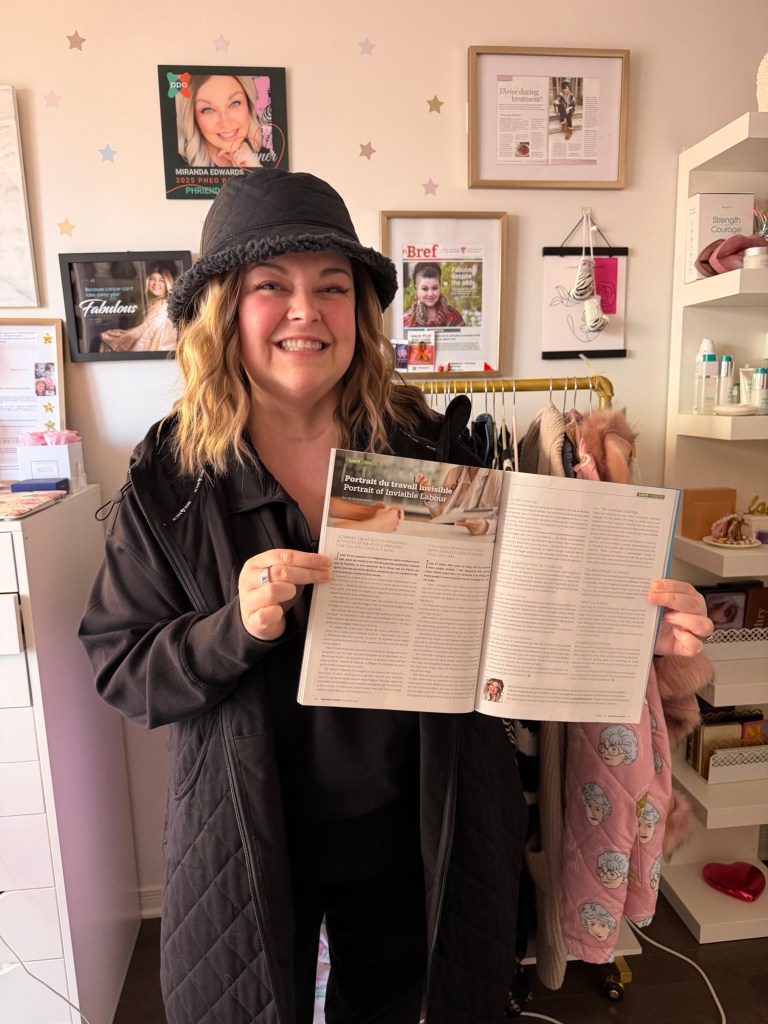
Miranda Edwards is the creator and voice behind Pheo vs Fabulous (pheovsfabulous.com). Through writing and social storytelling, she explores life as a medically complex ‘cancer thriver’ while asserting that no diagnosis can take away her ‘fabulous.’
Online link here page 66 & 67
 Pheo vs Fabulous